

Tinnitus Treatment
Tinnitus can't be cured but it can be treated.
We have a variety of approaches that can provide relief for the majority of people with tinnitus.
Understanding Tinnitus
If you’re experiencing persistent buzzing, whistling or ringing in your ears, we understand how frustrating and debilitating it can be. It’s a condition that affects millions of people worldwide, but relief is available.
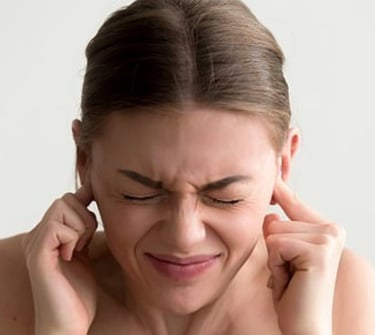
Tinnitus is the presence of an aural sensation in the ears, such as a sound, but whose source is not external to the ears. Put another way – hearing a sound in the ear in the absence of a sound source outside of the ear. Tinnitus is not a condition in and of itself but a symptom usually as a result of an underlying condition such as age-related hearing loss. Tinnitus manifests itself differently for different people, some may describe it as a buzzing noise, or a “whooshing sound” or a ringing or even a buzzing sound among others.
Ferguson’s clinical audiologists have helped patients overcome and alleviate the symptoms caused by tinnitus, through accurate diagnosis and effective tinnitus treatment therapy.
Our Approach
We carry out a complete hearing assessment including Puretone Audiometry, Tympanometry, Acoustic Reflexes, Otoacoustic Emissions and Speech Discrimination. Specifically for tinnitus assessment we conduct an interview using the Tinnitus Handicap Inventory (THI) to grade the severity of the patient’s tinnitus. Based on your evaluation we will implement the prescribed treatment plan. Management may include the use of hearing aid amplification, sound therapy and /or behavioral modification therapy.
The severity of your tinnitus depends largely on how much attention you pay to the unwanted sound. When tinnitus prompts negative feelings, it can cause a reaction that makes you pay more attention to it, and a vicious cycle begins. The aim of tinnitus therapy is to break this vicious cycle
Assessment and Medical Clearance
Tinnitus can be associated with ear and other anatomical disease, it is important that we determine what the underlying cause of your problem is. In most cases tinnitus is caused by an underlying hearing loss. Sometimes however it can be caused by other problems that are not appropriate for treatment in the audiology setting. If we find that your case is not suitable for treatment we would refer you to an ENT Specialist to rule out any health-related conditions that could be the cause of your tinnitus or could be treated through medical and/or surgical intervention.
Evaluation and Treatment Options
We understand that your hearing journey is unique. That’s why we offer comprehensive clinical hearing services delivered by a team of Qualified Expert Audiologists who genuinely care about your well-being.
Our experience of helping Patients with tinnitus has allowed us to develop a variety of approaches that can provide relief for the majority of people with tinnitus. The following is the process for evaluation and treatment:
Treatment Of An Underlying Hearing Loss
There are many options for treatment with tinnitus dependent on the severity and the underlying cause. In many cases, correction of a hearing loss with a well fitted hearing aid system will eliminate the tinnitus symptoms. In the cases where this isn't enough we also prescribe sound therapy. Many modern hearing aid devices are combination devices giving amplification and sound therapy.
Sound therapy Treatment
In Cases where there is no hearing loss is or it is not severe enough for treatment. We would prescribe sound therapy devices. Sound therapy has proven to be an effective management tool for many people who suffer from tinnitus that isn't associated with underlying hearing loss.

FAQs
We take time to understand your symptoms of tinnitus and the suspected cause behind them. Your appointment includes a full hearing assessment to check for hearing loss, age related hearing loss, ear infection, or earwax blockage that may make tinnitus worse. This helps us identify the underlying cause and decide how your tinnitus should be treated.
We may carry out Puretone Audiometry, Tympanometry, and other tests to assess one or both ears. If your tinnitus symptoms require further medical clearance, we may advise seeing a healthcare provider or throat doctor to rule out ear conditions or health conditions linked with tinnitus.
How is tinnitus diagnosed at Fergusons Hearing Aid Clinic?
What tinnitus treatment options do you offer in Limerick?
Our tinnitus treatment options include hearing aids, sound therapy, tinnitus retraining therapy, and talking therapy where appropriate. Each method aims to reduce the impact of persistent tinnitus and help you feel more in control.
Many people with tinnitus find relief when hearing loss is corrected with modern hearing aids or combination devices. If your tinnitus sound continues without hearing loss, we may recommend sound generators or white noise to help reduce the impact of severe or persistent tinnitus.
What is tinnitus retraining therapy and how does it work?
Tinnitus retraining therapy works by helping your brain respond differently to the tinnitus sound. It combines talking therapy with sound therapy to reduce the stress linked with tinnitus symptoms. Over time, your brain learns coping techniques that make the sound less noticeable.
This treatment is helpful for people with tinnitus who want long term support for severe tinnitus or persistent tinnitus. It can support you even when the causes of tinnitus cannot be reversed, allowing you to feel calmer and less focused on the sound.
Can hearing aids help reduce tinnitus symptoms if I also have hearing loss?
Yes, hearing aids can be an effective part of tinnitus treatment when tinnitus is linked to hearing loss. By improving your ability to hear sound in daily life, your brain places less focus on tinnitus, which often makes tinnitus worse. This can bring meaningful relief for many people with tinnitus.
Modern hearing aids often include built-in sound therapy features that support people with tinnitus. These combination devices offer both amplification and gentle background sound, helping your brain shift attention away from the tinnitus sound.
Can ear wax cause tinnitus or make symptoms worse?
Yes, ear wax build-up is a common reason people develop tinnitus or notice tinnitus suddenly. A blockage in the ear can affect how sound travels through the inner ear, which may make tinnitus worse or trigger new tinnitus symptoms. Removing the wax often reduces the noise in one ear or both ears.
If you have persistent tinnitus, we will check for earwax blockage as part of your assessment. Clearing the ear safely can relieve symptoms, but if tinnitus continues, we can guide you through further tinnitus treatment based on the underlying cause.
Get In Touch
Address
61 Catherine St, Prior's-Land, Limerick, V94 078P, Ireland
Contacts
Tel: +353 (0) 061 313 633
WhatsApp: +353 87 360 7747
info@ferghac.ie
Opening Hours
Monday - Friday:
9:00 AM - 5:00 PM
Saturday - Sunday:
Closed
We close for our lunch hour from 1-2.
We are closed bank holidays, St Patrick's Day & Good Friday
Services